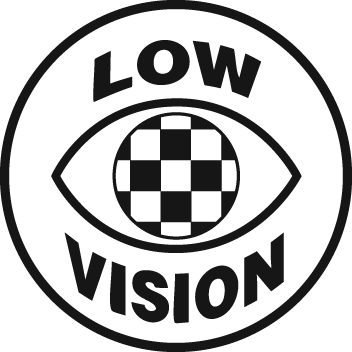

The Checkered Eye Project
If you meet someone wearing a checkered eye,
it means they have low vision/partial blindnessl/they are on the blindness spectrum.
Creating kindness through a
glance.
The checkered eye is a
compassion cue, reminding
us to pause, connect, and
extend compassion to those
around us. Recognition of a
hidden need like low vision is
crucial to knowing how to
help if necessary. It also
adds some understanding
when a person's demeanor
is not the usual.
As symbols, the checkered eye and any style of white cane both indicate their user is on the blindness spectrum.
Most people who use a white cane have severe blindness, and use the cane as a tool for independent travel. In this case it's called a long cane or mobility cane.
Some people use a white cane as a symbol, strictly to indicate to others that they have some degree of blindness. If a person has useful remaining eyesight, and doesn't need the cane as a tool, they may still choose to carry one to communicate their visual difficulties and increase their visibility in traffic. In this case it's called a symbol cane or ID cane.
Some people who use the type of cane that helps with stability or weight bearing, a support cane, if they also have low vision, may use a support cane that is white to communicate their low vision.
People on the blindness spectrum who do not need the white cane as a travel or safety device, may choose to use a checkered eye to indicate that their vision is impaired.
The awareness of a person's hidden needs can alleviate confusion, frustration, and embarrassment, for people with blindness and those with whom they interact.